

Turn Reading Into a Shared Cuban Culture Adventure
Kobi Travels to Cuba can become more than a read-aloud: it can open five playful paths into art, language, music, food, and memory-making. These easy, low-cost activities help children ages 4–8 revisit the story while building literacy, creativity, curiosity, and family connection. Choose one activity after reading, or spread all five across a week.
Keep the book close and let children lead with observations and questions. These ideas are starting points for respectful exploration, not substitutes for books, art, music, recipes, histories, and everyday perspectives shared by Cuban people. When possible, seek Cuban voices and sources together, and avoid presenting one image or experience as representing every Cuban family.
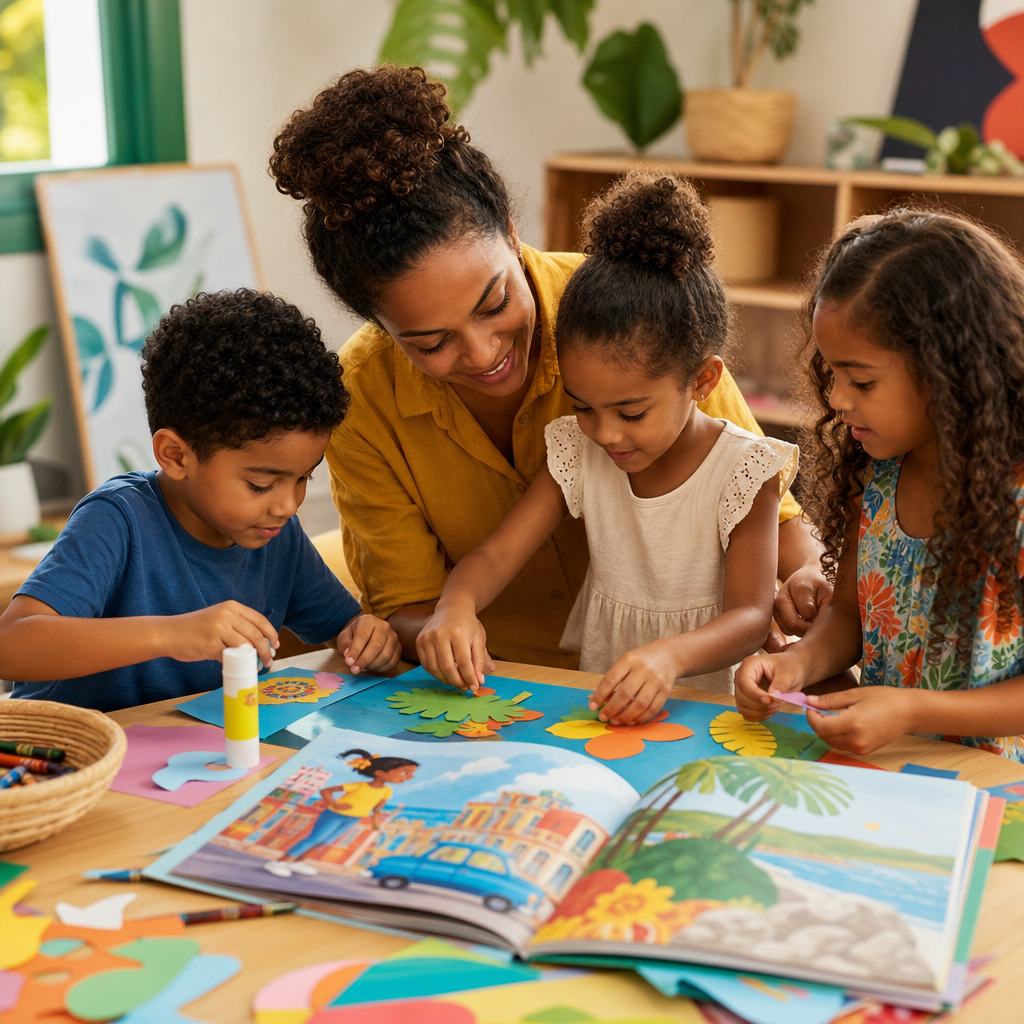
1. Build a Colorful Neighborhood Art Scene
Materials: paper, crayons or washable markers, child-safe scissors, glue, and scrap paper.
Return to an illustration that shows buildings, streets, plants, or people. Ask, “What details help this place feel lived in?” Invite children to draw a neighborhood scene using bold shapes and colors they notice or imagine, without claiming there is one “Cuban look.” Add doors, balconies, trees, signs, neighbors, pets, and places where families gather.
Afterward, each artist dictates or writes two sentences about who lives there and what happens next. This turns artwork into storytelling and gives emerging writers a welcoming entry point.
2. Collect Simple Spanish Story Words
Materials: sticky notes or small paper cards and a pencil.
Choose three to five words connected to what children see or discuss, such as hola (hello), familia (family), casa (home), música (music), or gracias (thank you). Say each word naturally, explain its meaning, and place its card beside a matching picture or object.
Play “I spy” or ask children to find the card when you say its meaning. Treat pronunciation as practice, not a performance; model listening, trying, and correcting kindly. Children who prefer not to speak can point, match, or draw.
3. Add Music, Rhythm, and Whole-Body Movement
Materials: a phone or speaker, plus homemade shakers if desired.
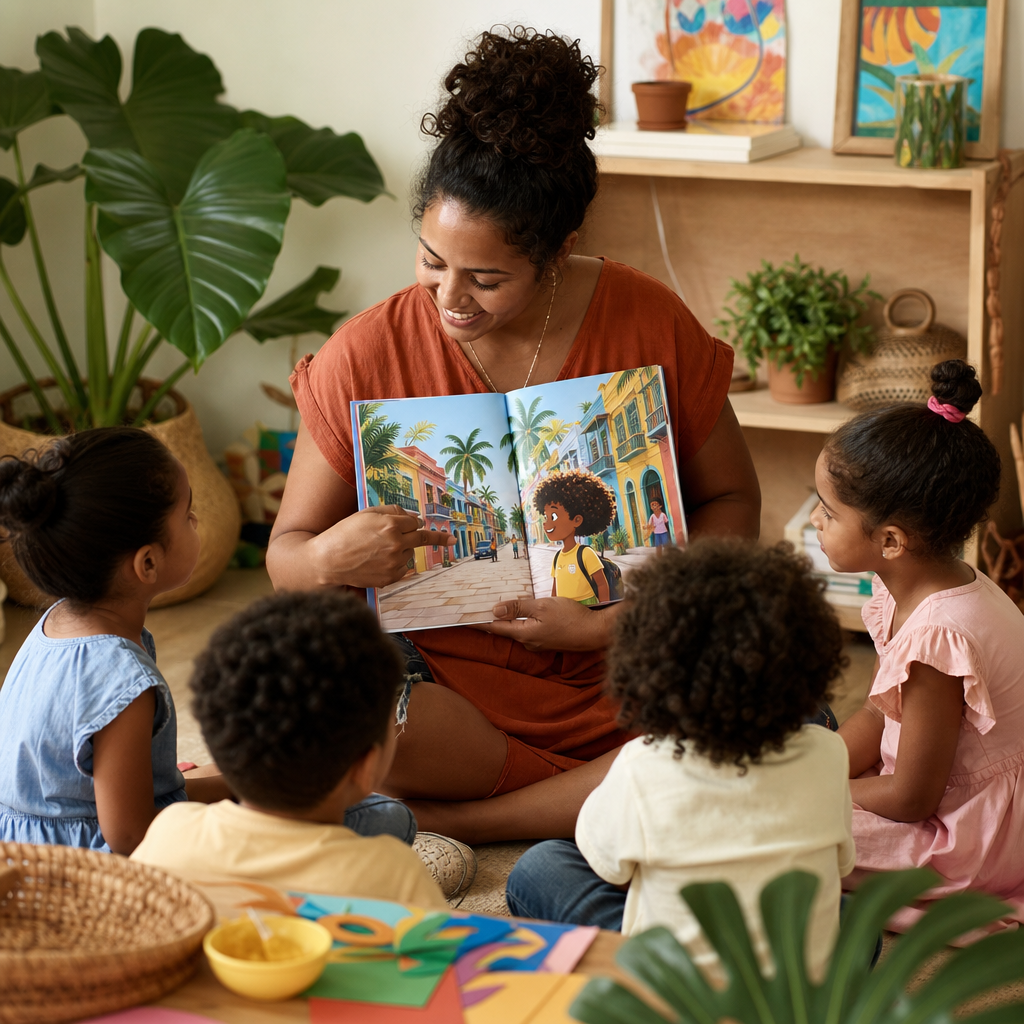
Select a child-appropriate recording by a Cuban artist from a library or trusted music source. Name the artist and song rather than calling it simply “Cuban music,” because Cuba holds many musical traditions and individual styles. Listen once for instruments, tempo, and mood.
Listen again while children clap a repeating beat, sway, step, freeze, or shake a sealed container filled with a little dry rice. Check lids carefully and supervise small materials. Pause afterward: “Which movement matched the music, and why?”
4. Share a Cuban-Inspired Fruit Tasting
Materials: familiar fruits, small plates, napkins, and an optional squeeze of lime.
Offer a simple tasting of fruits associated with warm climates and used in Cuban foodways, such as mango, pineapple, banana, guava, or citrus, based on what is available locally. Avoid suggesting that one snack defines Cuban cuisine. Let children observe color, scent, texture, sweetness, and tartness, then choose three describing words.
5. Make a Travel Passport or Memory Page
Materials: folded paper or a notebook, crayons, stickers, and glue.
Fold paper into a pretend passport, clearly labeling it “Story Journey” so children understand it is for play, or create one scrapbook page. Add the book title, a drawn “stamp,” a favorite scene, and one new word. Children can glue in their neighborhood picture or draw the snack they tasted.
Finish with a sentence stem: “I noticed…,” “I wondered…,” or “I want to learn….” For children who are not writing yet, record their exact words. Revisit the page after another reading and add a changed idea, showing that thoughtful learning continues.
Close With Curiosity, Not a Quiz
Bring the group together and ask: “What is one thing you noticed, one thing you wondered, and one thing you would like to learn from a Cuban person, creator, or book?” Welcome uncertainty. The goal is not perfect recall; it is attentive reading, respectful questions, and a desire to keep learning. Display the pages, revisit favorite moments, and celebrate questions that lead your family or group toward deeper, more personal understanding.

